Monday, October 10, 2011

An Uncommon Guide To Birzebbuga

Birzebbuga has been ruined in many ways, which is why few people would recommend you visit it. It is for the same reason that this place is so interesting; this is where the island’s dirty laundry hangs, revealing stories of war, colonization and corruption, telling of a place that feels forgotten by its own country. Give Birzebbuga some attention and you will learn more about Maltese identity than in any other place.


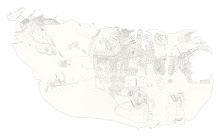
(click on the map to view full size)

The map outlines a rough route along the town’s promenade, it is purposely fragmented, pointing out details and leaving others for you to discover. Use it to explore, it will reveal anecdotes and secrets. Wander off its proposed route and discover some for yourself…

Explore the area and look out for scars from every period in Maltese history: this area is rich in pre-historic settlements and Megalithic Temples. It was the first place to be inhabited by the Phoenicians, houses the remains of a Roman Villa and is scattered with fortifications built by both the Knights of St.John and the British during WW2. More recently it has been heavily impacted by the large amount of industry thrown its way and has seen a massive influx of asylum seekers due to the proximity of the Immigration Detention Facilities. 

1. As you walk along the promenade keep an eye on the Freeport, a transshipment hub built in 1988, its large cranes cannot be missed. It is indisputably the landmark of the town, whether the inhabitants like it or not. The Freeport is quite a spectacle; dancing cranes, clumsy container liners turning in the bay, and the ‘lego-land’ repetitive patterns made by the piled up containers. It has an industrial beauty about it. Yet bear in mind that this has completely taken over every view from the town, it obscures the natural horizon, fills the bay with the echoing sound of clanking containers, and at night it floods it with yellow light. This heavy stamp of international shipping has marked Birzebbuga and its inhabitants so deeply, yet none of these containers are destined for Malta, they are stopping here in-transit. The Freeport seems a poignant reminder of much of Malta’s relationship with the rest of the world: that of being a well positioned rock - a convenient harbor, an aircraft carrier and now a concrete strip on which to leave containers.

2. On a quiet Summer’s afternoon set up your umbrella in a dilapidated hotel (accessed from the St. George’s Bay promenade). This used to be a wedding reception venue, which newlyweds would leave by boat, heading straight to Gozo for their honeymoon.

3. Swim in the shadow of the 18th century Ferretti battery.

4. Enjoy the rare moments when you can see the horizon.

5. Dream of ancient civilizations, investigate the deep wells and cart-ruts cut into the limestone seabed of St.George’s Bay. Is this where the name Birzebbuga comes from? (Bir=well, zebbuga=olive)

6. Wonder at the crazy juxtaposition of the large gas tanks towering behind pretty little houses. These were originally built by British Petroleum and are now in use by Enemalta Corporation, Malta’s main suppliers of electricity and gas.

7. In December 1989, a few weeks after the fall of the Berlin wall, Bush and Gorbachev met on a soviet cruise ship in this bay and declared the end of the cold war. Malta was chosen because of its position at the centre of the Mediterranean - where East meets West and North meets South. However the choice of location and Bush’s idea to meet on a ship was not the best of combinations, because of the bad weather – the summit became known as the ‘seasick summit’.

8. Imagine what the town used to look like. Stop and admire the ‘villeggatura’ (holiday homes) lining the seaside. Birzebbuga was once a small settlement of these pretty little two-storey houses. These ‘villaggatura’ houses once existed all over the island’s coastal towns but many have been demolished for the construction of flats or hotels. Take them in, who knows how much longer they will be here for.

9. Get political. Walk around the town's dilapidated waterpolo club. Ask a local how it ended up this way.

10. Kalafrana, where the Freeport now stands, used to be a British seaplane base, and so Birzebbuga transformed into a strip full of the bars and entertainment facilities necessary to keep the officers happy. Look around town for the Lido Cinema and other remnants of this period.

11. Buy Malta's best fish and chips from Borda's and eat them on a bench by the sea.

12. Find the perfect fishing spot.

13. Listen to the dead silence during a Bocci tournament on a Summer's evening.

14. Sit by the salt-pans and let the ground and walls reveal their stories to you. This area known as Wied il-Buni used to house two British Gun posts, a large defense wall and moat. Part of the wall is visible behind the Bocci Club and if you study the ground closely you can make out the footprints of the gun posts.

15. Drink a cisk, eat some hobz biz-zejt (preferably sitting on a metal chair) and watch the Freeport - its cranes, containers and ships.
The above is my entry in the Uncommon: Malta and Gozo, for more information check out the Uncommon Guide Book Blog:     uncommonguidebook.tumblr.com
And for a review of the book:    maltatoday.com.mt/whats_on/uncommon-malta/book-review-uncommon-malta-and-gozo
Or simply watch someone flick through the book: designyoutrust.com/2011/07/21/uncommon-guide-book-malta-gozo

Monday, June 20, 2011

Simshar Teaser Trailer


Simshar - Teaser Trailer from Martin Bonnici on Vimeo.

check out the teaser trailer above for SIMSHAR, on which I was doing the production design - opinions welcome!

Friday, March 25, 2011

"We could have been replaced by an Aircraft Carrier"


My father said this during a conversation we had over one of my maps (see more on map conversation here). This was said in relation to Malta's usefulness to the rest of the world - its strategic position at the centre of the Mediterranean. He referred to the Freeport as another example of this: a large slab of concrete on which to keep containers for transhipment, before that during WW2 it was an aircraft carrier strategically positioned between Italy and North Africa, before that a port,...

Winston Churchill called Malta the "unsinkable aircraft carrier" - perhaps this is more positive than my father's comment - since this elevates the island slightly higher than an average aircraft carrier? (Malta played a significant part in WWII and was one of the most intensively-bombed areas during the war. The German Air Force and the Italian Royal Air Force flew a total of 3,000 bombing raids over a period of two years.)

I put this image together, another play on scale, perception and identity - is this how Malta looked to its colonisers? 

Saturday, December 4, 2010

The Lido Cinema needs YOUR help!


I hear that the Lido Cinema in Birzebbuga is to be demolished - is there nothing we can do? Please post your ideas...

Tuesday, September 28, 2010

Birżebbuġa Waterpolo Club

- or what's left of it


The club's dilapidated state is a result of being rendered unusable following the construction of the Freeport; the regular dredging of the sea bed and the movement of large ships in the bay caused the seawater outlets of the pitch to block up, filling the pitch with debris and rendering the water unsuitable for swimming. The pitch and the club were closed and the club house demolished.

find out more about the club and its story at:  http://birzebbugawaterpolo.webs.com

Monday, September 27, 2010

Thoughts on Uncle Lino's House

I wrote a letter to a friend after finding out that my Great Grandfather's house in Zejtun, was to be sold. The house was so full of childhood memories that I felt desperate at the thought of never being able to revisit it, so in the letter I wrote everything I could remember - I was afraid that without the house to remind me, I would forget. 

On my next visit to Malta I was able to visit the house one last time as it hadn't been sold yet. But everything had been auctioned off and the remaining unwanted items sat in the middle of large empty rooms. I looked all over, hoping to find something I would remember, wanting to give some last un-auctioned item a home, but nothing was familiar. It was strange to walk around this empty and unfamiliar place, it contrasted so much with what I'd described in my letter a few months earlier. 

I took photographs. I was trying to record and preserve what was left. But they were photos of unrecognizable empty rooms. They only served as a record of what was not there anymore. Later I put the letter and the photos together, and a strange little book was born (Uncle Lino's House), some sort of attempt at bridging nostalgia and reality. 


Uncle Lino's House

Have I ever told you about Uncle Lino?
He’s the brother of my grandfather, Nannu Fons - we used to call him Nannu Doc because he was a doctor - but that’s a whole other story. Today I want to tell you about Uncle Lino, well, actually I really want to tell you about his house. But first a little bit about him.
Uncle Lino is a bishop, most people call him Nuncio Gerada but we’ve always called him Uncle Lino (his real name is Emmanuele, but that just complicates things). He was born on the 18th May 1920. This might not mean anything to you, but to a Catholic Bishop it meant a lot – he shared his date of birth with Pope John Paul II – and never failed to remind us.


My father always said that his grandfather (Uncle Lino’s father) simply lined up his sons and said to them, “you’re going to be a doctor, priest, chemist etc…” as that’s what they did because that’s how things were in those days. So as you might have guessed Uncle Lino is the son who stood under his father’s pointing finger as his father bellowed “PRIEST” on that life-defining day. And so he became a priest. And since diligence, impatience and high desires run thick through all Geradas’ blood, my Uncle Lino went on to become an Archbishop and eventually Papal Nuncio (kind of like being the Pope’s Ambassador).


Uncle Lino was Nuncio in El Salvador and Guatemala in the 70s, Pakistan in the 80s and Ireland in the 90s (during his time in Ireland he collected all the Funday Times newspapers for us). I wish I’d appreciated it before he got dementia, but I didn’t, so I don’t know all the stories that you are probably eagerly awaiting. I’m sorry.

For most of my life I have only ever seen Uncle Lino on Christmas Eve. Our whole family would gather at his house every year on that night; my grandfather’s brothers and sisters, their cousins, husbands, wives, children and grandchildren and their boyfriends and fiancés. The whole extended Gerada family at its loudest, standing around Uncle Lino’s house in Zejtun. There would always be copious amounts of alcohol and cold sausage rolls and other party food aplenty. And our parents would all get very drunk and embarrassing. At midnight, with half the family drunk (including Uncle Lino) we would have a mass in the little chapel and some poor male cousin would have to go through the humiliation of being alter boy whilst the rest of us tried to make him laugh. Everybody was either drunk or on a sugar high; the Christmas midnight mass was always very, very entertaining.

How can I possibly describe his house to you? I wish I could take you there with me, ideally both of us eight years old. The whole house like another world, some sort of magical adventure playground that you entered through a typical Maltese front door, its secrets unknown to the rest of the village. You’d expect to find doors to parallel universes and books that uncovered the secrets of life amongst all the strange treasures from far away countries and the videotapes (yes videotapes… the videotapes are amazing, they’re all labelled like the videos in that Korean restaurant on Store Street, except the labels are typed out with a typewriter).

I guess I can tell you now (because now the house is locked and barred and empty) that you didn’t need to ring the doorbell to enter this world, the keys to the locked antiporta were always hidden behind the outer wooden door, which was always left open. All you had to do was step in from the street, reach blindly for the keys behind the huge doors and you were in…

There was a room that one only ever walked through to get somewhere else, nothing in it invited a child (or adult, as I discovered upon growing-up) to stop or sit down. We all knew, without being told, that we shouldn’t - nobody even dared to hide in it during our highly competitive hide and seek games (now this is strange because it would have made the best hiding place of all).
The room was green. Perhaps nothing in it was green but it definitely had a green feeling about it, it was green. You went in through thick, heavy velvet curtains that stopped all light from entering it. It always gave me the sensation of going indoors at noon in the summer, except your eyes never adjusted to the light as they do on such a day, because there simply wasn’t enough in there.

Occasionally you caught a glimpse of an enormous pair of elephant tusks towering above a huge mahogany desk. And once I even saw a wooden bible holder on the desk, upon which sat a replica of the Book of Kells - as far as I know it was handmade, complete with gold leaf capital letters, by some Irish monks for Uncle Lino to mark the end of his being Archbishop of Ireland (I visited Uncle Lino in Ireland when I was eleven, he lived in a huge monastery with an Alsatian called Murphy).

As teenagers we played a new kind of hide and seek, we found that the kitchen was the best place to hide frightened boyfriends. Under the pretence of heating up sausage rolls and mini-quiches we had our own little party, balancing wine glasses on the 70s style furniture and leaning on the ancient well opening, away from our embarrassing family.
Our hiding place was soon found out, when, typically, the mothers and aunts came in for food supplies as soon as we broke the rhythm of trays leaving the kitchen.
The informal backdrop of the kitchen (and perhaps the wine too) suddenly made mingling with mothers and aunts less daunting for the boyfriends, and more acceptable to us. They too found a piece of furniture to lean on and joined in the conversation.
Slowly more family members entered in search of food - for at this point we’d completely forgotten that to keep our cover we should occasionally distribute food - until the dining room was left empty if not for Auntie Maria and Uncle Lino, the two family members who couldn’t get off their chairs unaided. And so that year, when the majority of us were teenagers, in a strange turn of events we all happily mingled in the kitchen (a room which we’d hardly ever been into before) forgetting the sole purpose of being there, whilst Auntie Maria and Uncle Lino fell asleep in their dining chairs, wondering where the sausage rolls were (probably getting burnt in the oven).

The videos covered the walls. There must have been hundreds. And it’s funny because the room was so small and full of antiquities, but every shelf, table, cupboard, surface, even the hole in the wall, was crammed with videos. And every video had been meticulously labeled with a typewriter and little labels, every single one was exactly like the next, God alone knows who did it, surely not Uncle Lino - he was the most impatient person I’d ever met (besides every other member of the family). And where did he get them all from? The selection was so random; Rocky 2 stood next to The Snowman which was in the corner with Pretty Woman, although I’m probably lying because I don’t really remember, all I remember is loads of clean, white labels.

Two huge zebra-skin covered bongos towered above you as you entered the house. I don’t think I have ever felt as old as the day when I entered the house and found that I was taller than the bongos.
They fascinated me. I have no idea why because in retrospect they were quite ugly. But I suppose it wasn’t them, but what they represented that fascinated me. To me they were a clue to what Uncle Lino did when he wasn’t being Uncle Lino – when he was Nuncio Gerada, of which we almost knew nothing. They were a little reminder that he was traveling around the world the rest of the time (when he wasn’t sitting in the dining room with Auntie Maria complaining about how stupid our generation was).
The most exciting moment of our Christmas Eve party was when Uncle Lino handed out presents to all four generations of the family. We all stood in the hallway, eagerly (and apprehensively - because you really never knew what to expect and whether you were going to be capable of holding a straight face) awaiting our name to be called out. Sure enough, every year, Uncle Lino never failed to outdo himself in both randomness and originality. And we loved it.
There was nothing better than being given something completely unexpected - whether you liked the present or not didn’t matter, this was all about excitement - the unpredictable gift.
I guess most of the gifts were little objects that he’d collected over the years, probably presents he’d received from all over the world, things that were slowly breaking his shelves, hiding his walls, closing him in, things he couldn’t get rid of, but perhaps could pass on to his family. But it wasn’t only the exotic qualities of these presents that made them so unique, it was his personal touch. The choice of what to give to whom. It was another clue to this man that we knew so little about, and also perhaps a clue to what he thought of us. A copper money box for Andrea, a book about tortoises for Hannah, an engraved sickle for Pierre, a tea set for Julian…what did they mean?